Neon Genesis Evangelion
REI
AYANAMI
綾波レイ
First Child · Pilot of Evangelion Unit-00
Sync test in progress — scroll to begin

Scroll
She sits by the window with a bandage over one eye and says almost nothing. Somehow, that was enough to make Rei Ayanami one of the most recognisable characters anime has ever produced.
Rei is the First Child — the pilot designated to Evangelion Prototype Unit-00 at NERV's Tokyo-3 headquarters. She is quiet, obedient, and difficult to read. She eats alone. She does not decorate her apartment. When Shinji Ikari arrives in Tokyo-3, she barely acknowledges him.
But the version of Rei that people remember isn't the blank one. It's the small cracks in the blankness: the first time she smiles, the first time she doesn't know how to answer a question, the moment she realises she cares whether someone comes back.

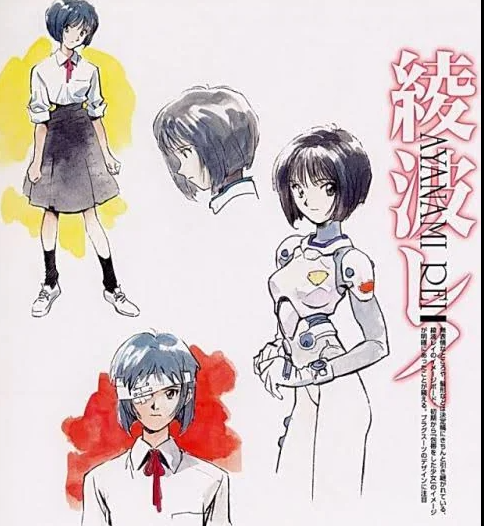
Rei's look came from character designer Yoshiyuki Sadamoto, working under director Hideaki Anno. The brief was less "make her pretty" and more "make her feel like she isn't quite here" — and the design solves it almost entirely with colour.
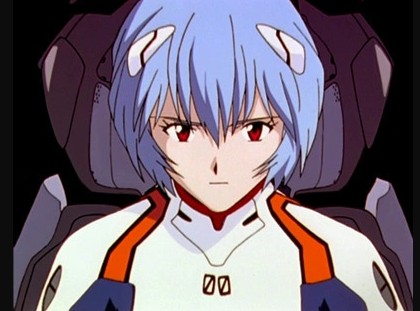
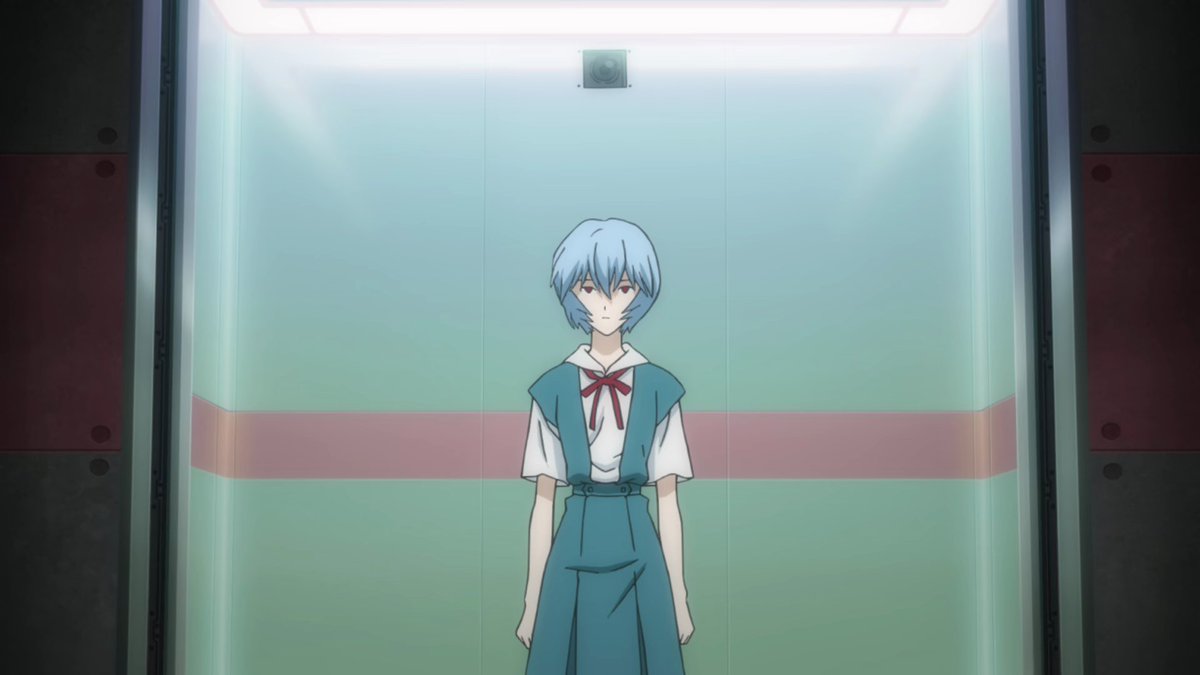
Pale blue hair and red eyes put her outside the show's otherwise grounded palette. Everyone else in Tokyo-3 looks like a person; Rei looks like an idea of one. Her uniform is identical to every other girl's, which makes the difference land harder.
The name is doing work too. Ayanami was an Imperial Japanese Navy destroyer — Evangelion names its cast after warships almost across the board (Katsuragi, Akagi, Sōryū). And Rei sits on a pile of homophones: 零 zero, 霊 spirit, 麗 lovely. Unit-00 is 零号機 — literally "Zero Unit." Pilot and machine share a number.
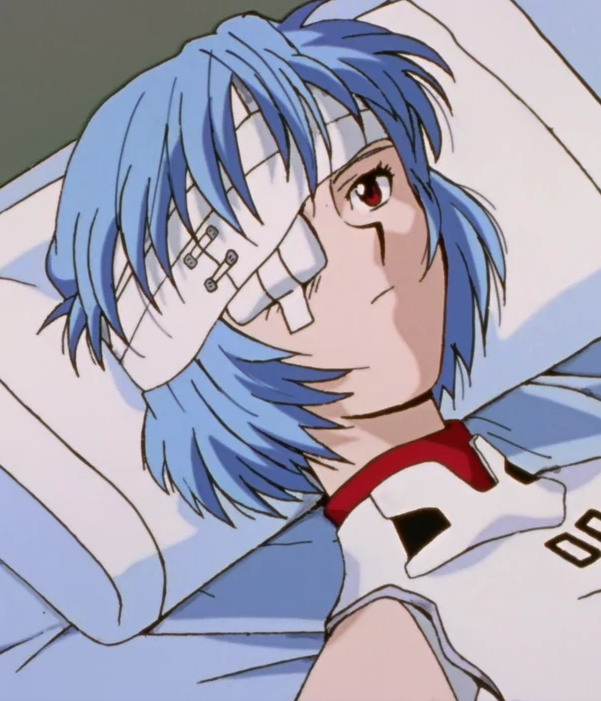
Episode 01's most reproduced image: Rei on a gurney, wrapped, one visible red eye. It's the show telling you she's already been hurt before the story started — and nobody is going to explain why for a very long time.
White, where the other pilots get colour. Vacuum-sealed by a wrist control, skin-tight by design — the suits are meant to look clinical rather than heroic, closer to medical equipment than armour.
Rei is widely credited with codifying the quiet, affectless heroine — the template later shorthanded as "kuudere." An entire generation of anime characters are, one way or another, arguing with her.
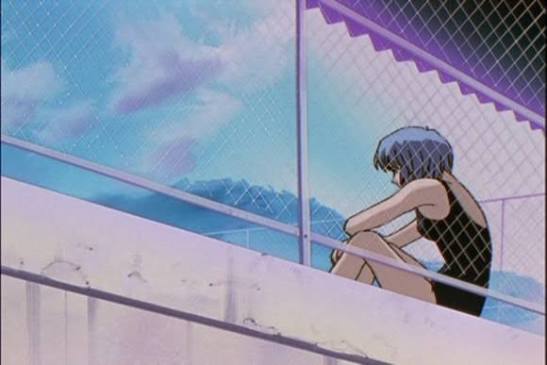


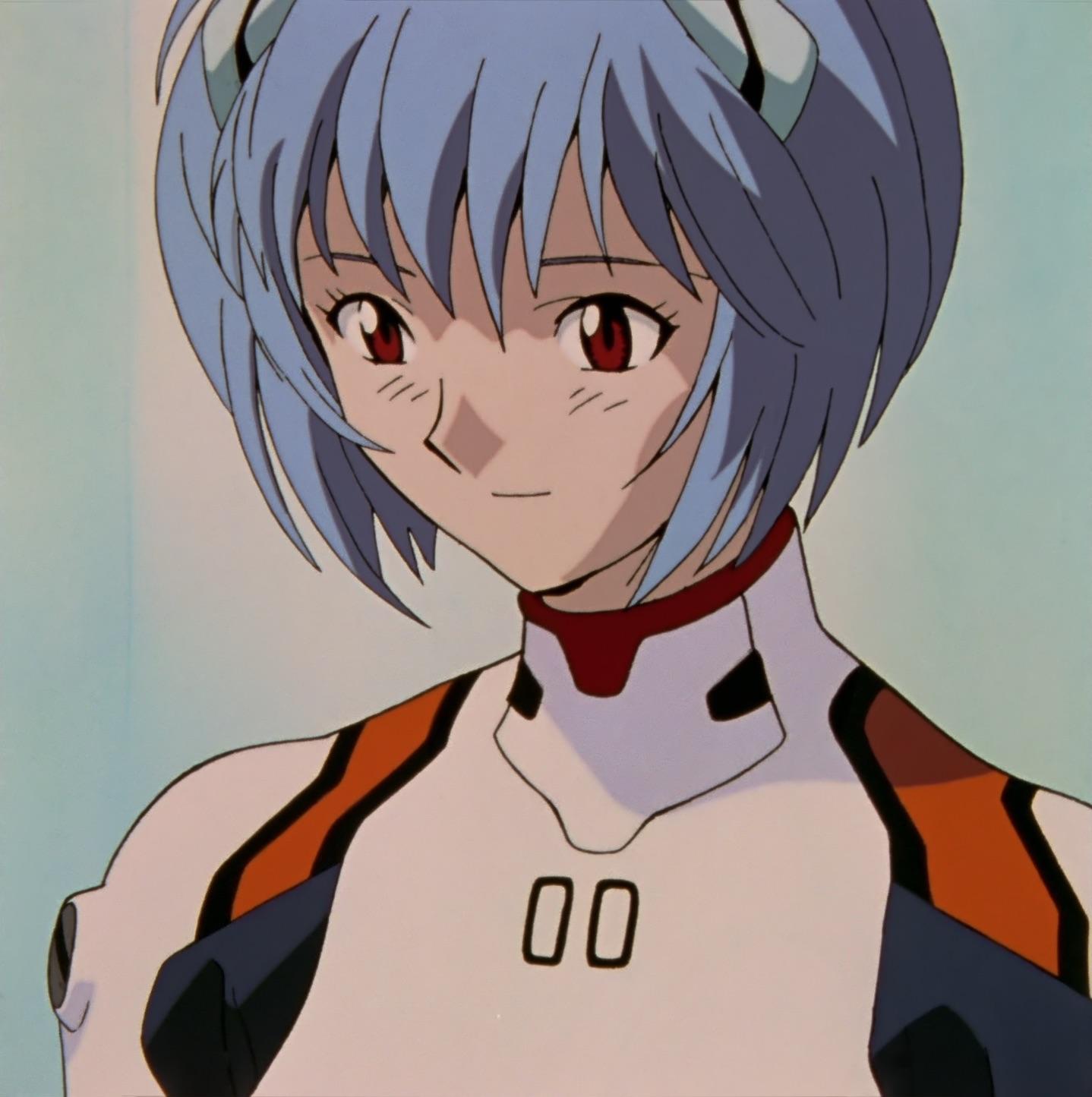
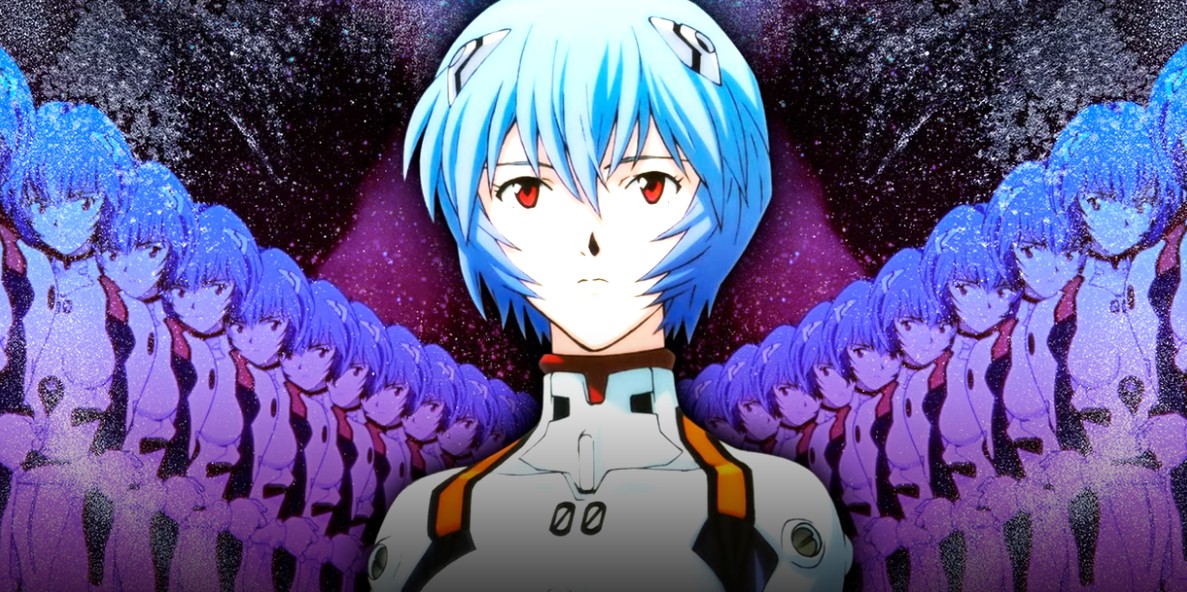
PATTERN BLUE DETECTED.
Everything below this line contains full spoilers for Neon Genesis Evangelion, including Episodes 21–26 and The End of Evangelion.
Classification: NERV internal · Committee eyes only
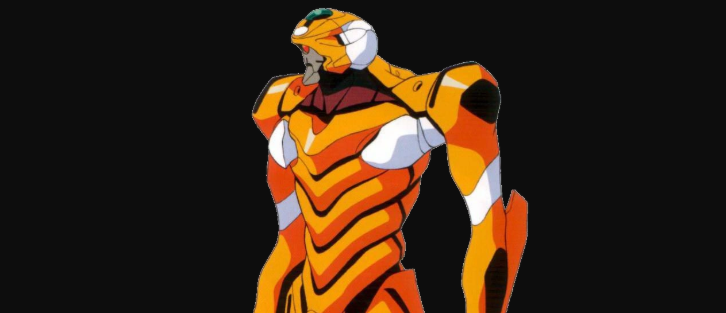
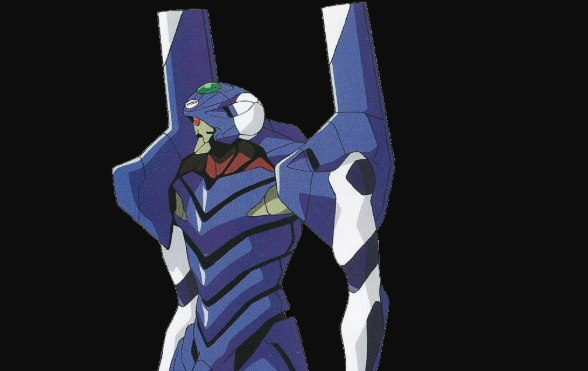
The prototype. Built before the test type, before the production models — and it shows. Unit-00 is the machine NERV learned on, and the one that keeps going wrong.
It first appears mothballed in bakelite after a failed activation test that put Rei in a hospital bed and gave the series its opening image. When it is finally reactivated, the armour has been repainted from orange to blue — the show's quietest visual admission that this thing was rebuilt after something bad happened.
Unit-00 goes berserk twice: once during activation, and again during the contact experiment, where it turns on Rei herself and has to be stopped by force. Nobody at NERV ever fully explains why. Ritsuko's theory involves the soul inside it recognising the pilot — and rejecting her.
Dr. Naoko Akagi split her own personality three ways and installed it in a supercomputer. Casper — the woman, not the scientist or the mother — is the one that keeps voting against NERV. Naoko also strangled a child who called her an old hag. Both of these facts are about Rei.
Rei's body is a clone, grown from the salvaged remains of Yui Ikari — Shinji's mother. Her soul is not human at all. It belongs to Lilith, the Second Angel, crucified in Terminal Dogma beneath NERV headquarters. Gendo Ikari built a girl out of the woman he lost and the thing that ends the world, and then raised her as a daughter he could aim.
The spare bodies are kept in a tank in Terminal Dogma, unmarked and interchangeable. When Ritsuko Akagi shows Shinji that room, the horror isn't the clones. It's that Rei is standing right there watching him look at them.

A child, raised inside NERV. Killed by Dr. Naoko Akagi, who strangled her after hearing her repeat what Gendo had said about Naoko behind her back. Naoko then took her own life. The first Rei died because an adult couldn't stand hearing the truth in a child's voice.
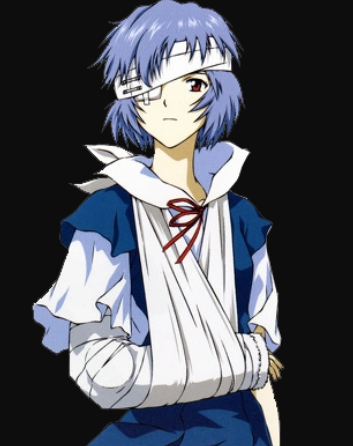
The Rei of almost the entire series — the one who learns to smile, cooks badly, and gradually stops being a tool. She dies detonating Unit-00 to kill the Angel Armisael and save Shinji. Her last thought is that she doesn't want to die, because she'd have to leave him.
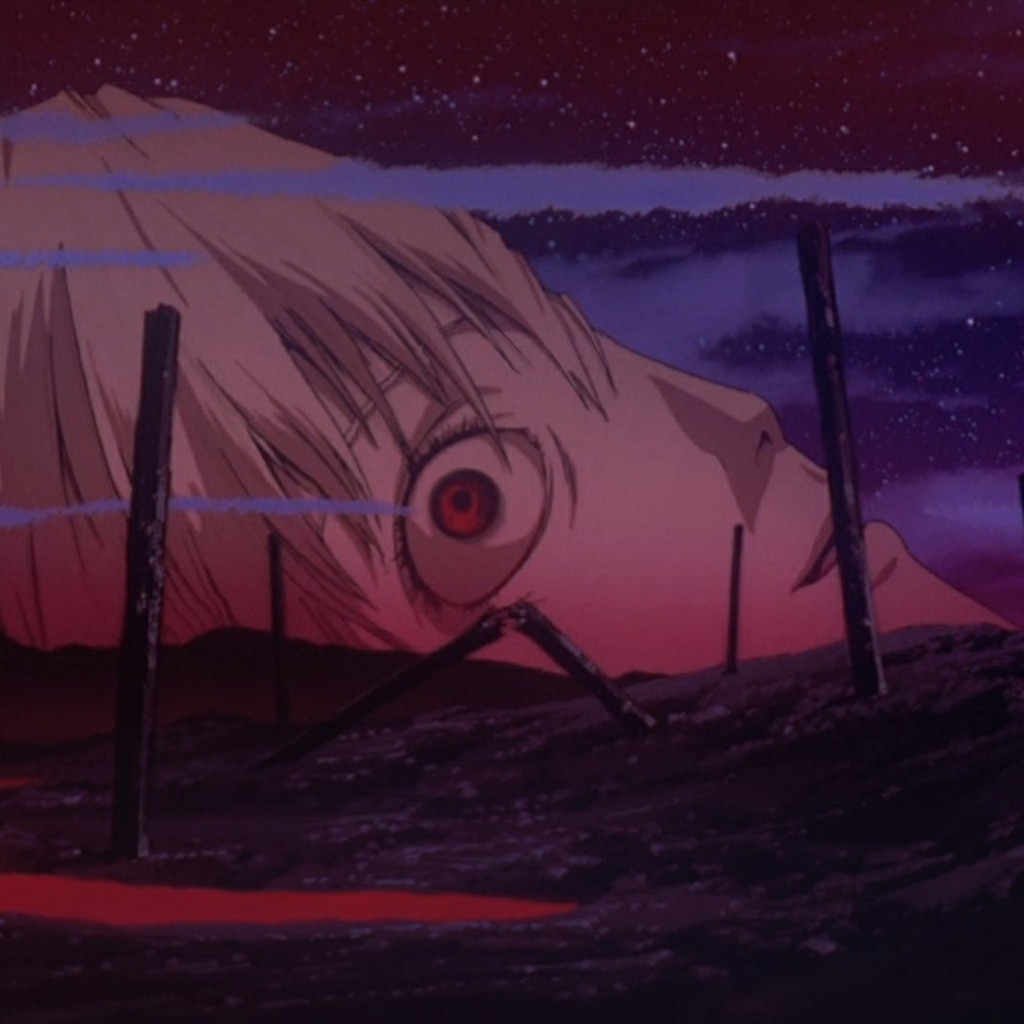
Wakes with the memories but not the attachment. Shinji knows immediately she isn't the same. And then, at the end, she does the one thing no one designed her to do: she refuses Gendo, walks away from him, and gives Shinji the choice instead.
"I am not your doll." — Rei, to Gendo, at the moment the entire plan comes apart. Every faction in Evangelion — SEELE, NERV, Gendo personally — builds its endgame on the assumption that Rei will do as she is told. She is the only variable nobody accounted for, because nobody ever thought to ask her anything.
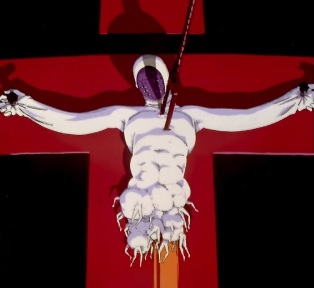
Beneath Tokyo-3, past Terminal Dogma, a white giant is pinned to a cross with a spear through its chest and a mask over its face. That is Lilith — the origin of humanity, the Second Angel, and the source of the soul inside Rei Ayanami.
Every Evangelion except Unit-01 is built from her. Every human being descends from her. And when the Human Instrumentality Project is triggered, it is Rei who removes the mask, absorbs Lilith, and grows to the size of the sky.
SEELE wanted a controlled apocalypse. Gendo wanted his wife back. What they got was a girl who had been told her whole life that she was replaceable, deciding for herself who to hand the world to.
The AT Fields fall. Every person on Earth dissolves into LCL and the sea turns red. Rei — enormous, smiling, wearing the face of Shinji's mother and Shinji's friend at the same time — holds the whole thing open and waits.

Rei Ayanami is barely in Evangelion. She has fewer lines than almost anyone, no arc in the conventional sense, and for two thirds of the show she is functionally furniture. She is also, thirty years on, the character people draw, cosplay, tattoo, and argue about most.
Part of that is design — she is unforgettable in a single frame. But mostly it's that Evangelion asks a genuinely uncomfortable question through her: what do you owe a person who has been told they don't count? Rei is treated as disposable by every institution in the story, and by the end she is the only one who acts freely. The blank page turns out to have been the point.